
Atul Keshap, a senior Indian American career diplomat and one of the rising stars in the United States foreign service, has been picked by Nisha Desai Biswal, the newly appointed assistant secretary of state for South and Central Asian affairs, to be her deputy.
China is distributing millions of controversial updated maps to its military in the first upgrade in 30 years, reportedly reinforcing its claims over Arunachal Pradesh.
Pakistan faces a challenge largely of its own creation and only political processes can correct it, argues Raza Rumi.
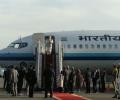
Prime Minister Narendra Modi on Sudnay arrived in Tehran on a two-day visit.

'This novel format of diplomacy -- the informal summit -- will not only facilitate bilateral communication and reduce miscalculations at the very top level of the two governments, but possibly open the space for China and India to speak in one voice on various issues of mutual concern,' note Feng Renjie and Ding Kun Lei

'The creation of Pakistan was integral to Britain's grand strategy.' 'If they were to ever leave India, Britain's military planners had made it clear that they needed to retain a foothold in the NWFP and Baluchistan because that would provide the means to retain control of Iran, Iraq, Kuwait, the UAE, Bahrain and Qatar.'
Agencies like the Tauheed Jammat have been set up in Kerala, Tamil Nadu and Telangana to radicalise the youth and recruit them to carry out terror activities in other countries. Vicky Nanjappa reports
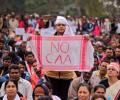
'The CAA should be kept in abeyance, without making it a prestige issue.'
'Laying down a clear policy on the future of illegal migrants will dispel anxieties and help in implementing the CAA, NPR and also the NCR,' suggests former Union home secretary Dr Madhav Godbole.
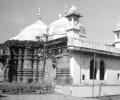
Contemporary records speak of Chhatrapati Shivaji's resolve to liberate Hindu holy places, and the later Maratha rulers carried forward his legacy, Colonel Anil A Athale (retd) reveals in a forthcoming book.

In a major breakthrough in China's worst terrorist attack at the Kunming railway station, police on Monday captured three militants from the restive Xinjiang province who fled the scene of slashing rampage that killed 33 people and injured 143 others.

Seeking to allay India's concerns, ambassador Luo had offered to rename the CPEC which passes through Pakistan-occupied Kashmir, insisting it was an economic cooperation and connectivity enhancement project devoid of "sovereignty issues".

Sanjeev Nayyar suggests 16 measures by which we can tackle our unrelenting and untrustworthy neighbour.

Carter has said India's designation as a 'major defence partner' would allow the US to cooperate with it --

The perfunctory management of external affairs has left India's foreign policy establishment largely unprepared to manage the consequences of dramatic international developments, says Nitin Pai.

'Biplab Deb said it was unfortunate.' 'If he continues to respond this way, then further damage will not happen.' 'But if under pressure from his party members he does not take action, then the future is dangerous.'

'A bit of marketing, a bit of positioning, and a lot of strategic thinking is required, and all this should be in aid of India's strategic intent: Becoming the third pole in a global G3 and aiming for Numero Uno,' says Rajeev Srinivasan.

Five years after Operation Neptune Spear took out Osama bin Laden, US President Barack Obama relives the historic night with television channel CNN's Peter Bergen at the Situation Room of the White House.

Aggressive top-order batsman Jesse Ryder was passionate about rekindling his international career after he was thrown a World Cup lifeline by being named in a New Zealand 'A' team for one-day matches in the United Arab Emirates next month.

If things work out, it will be a great leap forward in the Indian-Iranian economic ties in the new phase of Iran's reintegration with the world market following the lifting of sanctions, says Ambassador M K Bhadrakumar.
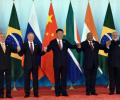
The BRICS also called upon all nations to adopt a comprehensive approach in combating terrorism including countering radicalisation and blocking terror financing sources.
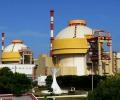
India and Russia are involved in talks to sort out the nuclear liability issues before they sign an agreement for setting up Units III and IV of the Kudankulam power plant in Tamil Nadu during Prime Minister Manmohan Singh's annual summit with President Putin in Moscow next week.

Hein Kiessling has the kind of access in Pakistan that journalists (and spies) would die for, says Kanika Datta.

Both sides to enhance cooperation in combating international terrorism.

How did the newly anointed heritage city bag the title and is it ready for the expected rush of tourists?

It is mischievous to imply that the proposed bill to grant citizenship to persecuted Hindus, Sikhs, Jains and Buddhists from other nations implies that Muslims and Christians are not Indians, says Sanjeev Nayyar.

'So a number of people are drawn in along with members of their friends' circle or their relatives.' 'A number of individuals find that they have more in common with the 'imagined community' that they discover online as opposed to their own physical community and indeed, even the majority Muslim community elsewhere.'

'It is a diamond which has a very long competitive history.'

New Delhi remains a priggish suitor to Washington's overtures, but it has begun appreciating potential tech benefits to ties with the US.

Fourteen photos from events that defined the world in the week gone by.

The attacks on Karachi airport and the Airport Security Force camp are growing signs how Pakistan's home-made monster, the Tehreek-e-Taliban Pakistan, is growing stronger and is no longer under the tight grip of the Inter-Services-Intelligence, its godfather. Vicky Nanjappa reports how these attacks are just the beginning and there are many more to come.

'Implementation of the US-India Defence Technology and Trade Initiative is as much a test for the Modi government to direct its bureaucratic processes, as it is of US commitment,' says Lieutenant General Anil Chait (retd).
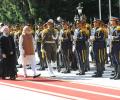
Invoking India's "civilisational ties" with Iran, Prime Minister Narendra Modi flew in to Tehran on Sunday on a two-day visit, saying his talks with the Iranian leadership would provide him an opportunity to advance the "strategic partnership" between the two countries.

Here is a recap of all the big events that shaped the world last week.

'The Left is dying, but its economic ideology rules, unchallenged.' 'Modi is its newest standard-bearer.' 'Even in today's bitterly polarised politics, if there is one thing on which not just the BJP and Congress, but all other parties agree, it is that socialist economics is the only way to survive,' says Shekhar Gupta.

United States President Barack Obama on Saturday warned lawmakers against turning "a blind eye" to chemical attacks in Syria as he made a strong pitch to war-weary Americans for "limited" strikes in the strife-torn country.

'How can Kashmir be demilitarised if the terrorist threat remains and Pakistan continues to incite elements in Kashmir to keep the internal situation unstable?' asks former foreign secretary Kanwal Sibal.

'Whether it's investments in Kashmir, building naval facilities, or selling top-of-the-range military equipment, Pakistan could well benefit more under Xi's watch.' 'Do Chinese concerns about the 'Islamisation' of Pakistan give it pause about how quickly to move forward with security and economic projects? At the moment the indication is quite the opposite: China is doubling down on its support to Pakistan, partly because of its fears about where the country is headed.'

Clinton and Sanders, meeting for the debate in Brooklyn just days before the crucial presidential primary in New York on April 19, minced no words as they attacked each other.

On the second leg of his trip to Central Asia, Narendra Modi makes quite an impression in Astana, as he talks about terror and trade, films and the future

'Tying somebody to the jeep is not the military way, but the officer was able to come out of the situation without any bloodshed.' 'I am not supporting him, but I am also not criticising him.' 'He had to use some mechanism to save the uniformed personnel, many of whom were Kashmiri boys of the J&K police,' points out Lieutenant General D B Shekatkar (retd), who was instrumental in the surrender of a record 1,267 terrorists in Kashmir.
 © 2026 Rediff.com - Advertise with us - Disclaimer - Privacy Policy - Sitemap - Feedback - About us - Terms of use - Grievances